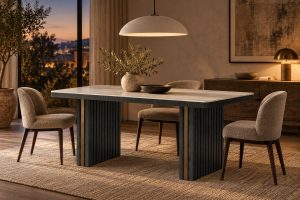
When comparing tabletop materials for bulk orders, sintered stone dining tables have become a top choice for furniture importers, retailers, hotels, restaurants, and interior project buyers. Before placing a wholesale order, buyers should compare table size, tabletop material, frame structure, finish quality, packaging method, MOQ, sample policy, production lead time, and quality inspection standards. A clear specification helps the factory quote accurately and reduces problems during bulk production.
What Buyers Should Know About Sintered Stone Dining Table
Compare marble and sintered stone dining tables by durability, heat resistance, cleaning, cost, weight, and wholesale suitability. The best choice is not only about appearance. A table must fit the target market, support daily use, ship safely, and arrive with consistent quality.
Key Buying Factors
- heat resistance
- stain resistance
- scratch resistance
- weight
- price
- commercial use
Material and Construction
Material affects cost, weight, durability, maintenance, and shipping risk. Solid wood offers natural value, MDF and veneer help control cost, glass creates a lighter visual effect, marble and sintered stone look premium, and metal frames improve strength and modern style.
Wholesale and Factory Considerations
For factory orders, confirm MOQ, sample cost, lead time, customization options, carton size, loading quantity, and inspection process. Buyers should also ask whether the supplier can provide consistent color, stable hardware, export packaging, and replacement support if problems occur.
How to Choose the Right Table
Start with the use scenario. A home coffee table should match the sofa and living room layout. A restaurant dining table should be easy to clean and stable under frequent use. A hotel table should fit the design concept and remain durable across many rooms. For e-commerce, packaging, assembly, and damage rate are just as important as style.
Quality Checklist Before Bulk Production
- Check dimensions, tabletop thickness, edge finish, and leg alignment.
- Review material samples, color swatches, and finish samples.
- Test table stability, hardware strength, and assembly instructions.
- Confirm export packaging for glass, stone, wood, and metal parts.
- Approve a sample before mass production whenever possible.
FAQ
Is sintered stone better than marble for dining tables?
The best material depends on target price, durability, cleaning needs, shipping weight, style, and whether the table is for home, hotel, restaurant, or outdoor use.
Are stone dining tables heat resistant?
The best material depends on target price, durability, cleaning needs, shipping weight, style, and whether the table is for home, hotel, restaurant, or outdoor use.
Do marble dining tables stain easily?
The best material depends on target price, durability, cleaning needs, shipping weight, style, and whether the table is for home, hotel, restaurant, or outdoor use.
Which stone tabletop is best for restaurants?
The best material depends on target price, durability, cleaning needs, shipping weight, style, and whether the table is for home, hotel, restaurant, or outdoor use.
Conclusion
A successful table order depends on the right balance of design, material, price, durability, packaging, and supplier reliability. Buyers who prepare clear specifications and inspect samples carefully are more likely to receive stable quality and better long-term value from their furniture factory.
Why Sintered Stone Dining Tables Are Gaining Popularity
Sintered stone is made by pressing natural minerals under extreme heat and pressure. This process creates a non-porous, ultra-durable surface. According to industry reports, the global sintered stone market is expected to grow at a CAGR of 6.5% from 2023 to 2030. For bulk buyers, this means increasing demand and competitive pricing.
Sintered stone dining tables offer superior heat resistance up to 1200°C. They are also highly resistant to scratches and stains. This makes them ideal for commercial use in hotels and restaurants. In contrast, natural marble can etch when exposed to acidic foods like lemon juice or wine.
Cost Comparison for Bulk Buyers
Marble dining tables typically cost 20-30% more than sintered stone equivalents. For a standard 6-seater table, marble may cost $800-$1,200 wholesale, while sintered stone averages $500-$800. However, shipping costs differ significantly. Sintered stone is lighter, reducing freight charges by up to 15% for container shipments.
Weight is another factor. A sintered stone tabletop weighs about 30% less than marble of the same thickness. This lowers shipping costs and reduces the risk of damage during transit. For e-commerce sellers, lighter products also mean lower return rates due to damage.
Durability and Maintenance in Commercial Settings
In high-traffic environments like restaurants, sintered stone outperforms marble. A study by the National Restaurant Association found that 70% of operators prioritize easy-to-clean surfaces. Sintered stone requires no sealing and resists bacteria growth. Marble, on the other hand, needs annual sealing and can stain easily if not maintained.
For hotels, sintered stone dining tables maintain their appearance longer. They do not chip or crack as easily as marble under heavy use. This reduces replacement costs over time. Bulk buyers should consider total cost of ownership, not just upfront price.
Shipping and Packaging Considerations
Export packaging is critical for stone tabletops. Sintered stone dining tables require reinforced corner protectors and foam layers. Marble needs additional wooden crates due to its fragility. Industry data shows that marble tables have a 5-8% damage rate during ocean freight, while sintered stone averages 2-3%.
Bulk buyers should request packaging samples before production. Confirm that carton dimensions fit standard container sizes. A 40-foot container can hold approximately 60-80 sintered stone dining tables, compared to 40-50 marble tables. This maximizes shipping efficiency and reduces per-unit costs.
Customization Options for Bulk Orders
Many factories offer customization for sintered stone dining tables. Options include table size, shape (round, rectangular, oval), edge profile, and base design. Sintered stone also comes in a wide range of colors and patterns, including marble-like veining. This allows buyers to match specific design themes without the maintenance issues of natural stone.
For restaurant chains, consistent color across multiple tables is essential. Sintered stone manufacturing ensures uniform appearance, while natural marble has unique veining that may vary between slabs. This consistency is a key advantage for bulk orders.
Environmental and Sustainability Factors
Sintered stone is considered more eco-friendly than marble. It uses recycled materials in some cases and requires less energy to transport due to lighter weight. Marble quarrying has a higher environmental impact, including habitat disruption and water usage. For buyers targeting green certifications, sintered stone is a better choice.
Additional FAQ Section for Bulk Buyers
Q: What is the typical MOQ for sintered stone dining tables?
A: Most factories require a minimum order quantity of 50-100 pieces for customized orders. Stock designs may have lower MOQs of 20-50 pieces.
Q: How long is the production lead time for bulk orders?
A: Lead time typically ranges from 30-45 days after sample approval. This includes material sourcing, production, and quality inspection.
Q: Can I get a sample before placing a bulk order?
A: Yes, most suppliers offer samples at cost (usually $50-$150). The cost is often refundable with the first bulk order.
Final Recommendations for Bulk Buyers
For most commercial and residential applications, sintered stone dining tables offer better value than marble. They combine premium aesthetics with superior durability, lower maintenance, and reduced shipping costs. Bulk buyers should prioritize suppliers with consistent color matching, robust packaging, and clear warranty policies.
Always request a pre-production sample and conduct a third-party inspection before shipment. This ensures the final product meets your specifications. With proper planning, sintered stone dining tables can be a profitable addition to your product lineup.
Conclusion
A successful table order depends on the right balance of design, material, price, durability, packaging, and supplier reliability. Sintered stone dining tables provide a cost-effective, durable alternative to marble for bulk buyers. By focusing on quality control and supplier communication, you can achieve stable quality and better long-term value from your furniture factory.