Cafe Seating Cleaning Labor: Compare Upholstery by Minutes, Downtime, and Replaceable Parts
Compare cafe chairs by real cleaning minutes, drying downtime, seam access, and replaceable seat components instead of judging upholstery by appearance alone.
Quick answer: Compare cafe seating by minutes of labor and hours of downtime, not by upholstery appearance alone. Run the same spill-and-clean trial on each sample, time the active work, check seam access, record drying, and confirm whether the seat pad or upholstered panel can be replaced separately. A chair that costs slightly more can be less expensive to operate when it returns to service faster and does not require full-frame replacement.
Coffee, milk, pastry crumbs, body oils and frequent wiping create a demanding seating environment. Operators often choose between bare frames, wipeable upholstery and softer fabric by looking at style and purchase price. The missing measure is cleaning labor: how long the team spends on each chair, how many seats are unavailable, and what happens when a stain or tear cannot be resolved during normal closing work.
Define the cleaning job before comparing chairs
Write a one-sentence cleaning protocol based on the products and methods the cafe actually uses. Identify the routine cleaner, cloth, vacuum tool, spot treatment and drying window. Check every chemical against the supplier’s care guidance. A sample test is meaningful only when the same method is applied to all options.
Separate three tasks: routine wipe-down, spill response and periodic deep cleaning. A smooth surface may be quick every night but still collect residue in seams. A textured fabric may hide minor soil yet need vacuuming and extraction. Record these jobs independently so one dramatic spill does not distort the everyday labor estimate.
Measure active minutes and elapsed downtime
Active labor is the staff time spent moving, vacuuming, wiping, treating, rinsing, drying and returning the chair. Elapsed downtime is the period before a guest can use it again. The two numbers can be very different. A wet-cleaned chair may require only six active minutes but remain unavailable for several hours.
- Seconds to pull the chair from its table and inspect all sides.
- Minutes to remove crumbs from seams, gaps and the underside edge.
- Time for the approved cleaner to dwell and for residue to be removed.
- Extra passes needed for common coffee, milk or food soils.
- Drying or curing time before the seat can return to service.
- Time to document, isolate or swap a damaged component.
Multiply the active time by seat count and frequency. Two additional minutes on eighty chairs equals 160 minutes each full cleaning cycle. If that cycle occurs twice a week, the difference becomes a recurring labor cost. This simple calculation makes the buying conversation more useful than a general claim that one material is easy to clean.
Test the complete chair geometry
Material data alone does not reveal whether a chair is easy to maintain. Look at piping, pleats, buttons, channel stitching, tight corners and the gap between seat and back. These details can trap crumbs or require a small brush. Inspect where guests place hands and where clothing rubs the edge. The frame finish around those areas must also tolerate the approved routine.
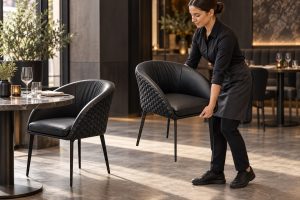
Use a real sample such as an upholstered dining chair and perform the trial at a cafe table. Check whether staff can reach the rear seam without turning the chair onto a vulnerable edge. Compare it with a faux leather dining chair or fabric dining chair using the same soil and timing sheet.
Evaluate cleaner compatibility
Ask for written care guidance for the exact upholstery and finish, not a generic material family. Confirm pH limits, prohibited solvents, disinfectant compatibility, abrasion warnings and whether spot testing is required. A cafe’s existing chemical may be suitable for one vinyl and harmful to another. Repeated use of the wrong product can dry, dull or discolor a surface before structural wear appears.
Test a hidden section first and let the sample complete the full drying period. Inspect it under both daylight and cafe lighting. Look for color change, tackiness, gloss variation, residue, raised fibers and weakened seams. Include the frame, legs and glides in the test because overspray and runoff do not stop at the upholstery edge.
Score seam and crevice access
Deep tufting and layered upholstery can create a strong visual identity, but they also create more surfaces to maintain. That does not automatically make them unsuitable. It means the buyer should place them where the labor fits the concept. A quieter lounge corner may support a softer, detailed chair, while a high-turn pastry zone may benefit from simpler seams and faster access.
Map seating by risk zone. Chairs near the pickup counter, children’s seating, the exterior door and a shared worktable may have different spill and soil patterns from low-turn window seats. The chairs and seating collection can be used to compare shapes for different zones rather than forcing one upholstery specification across the entire cafe.
Ask whether the upholstery is serviceable
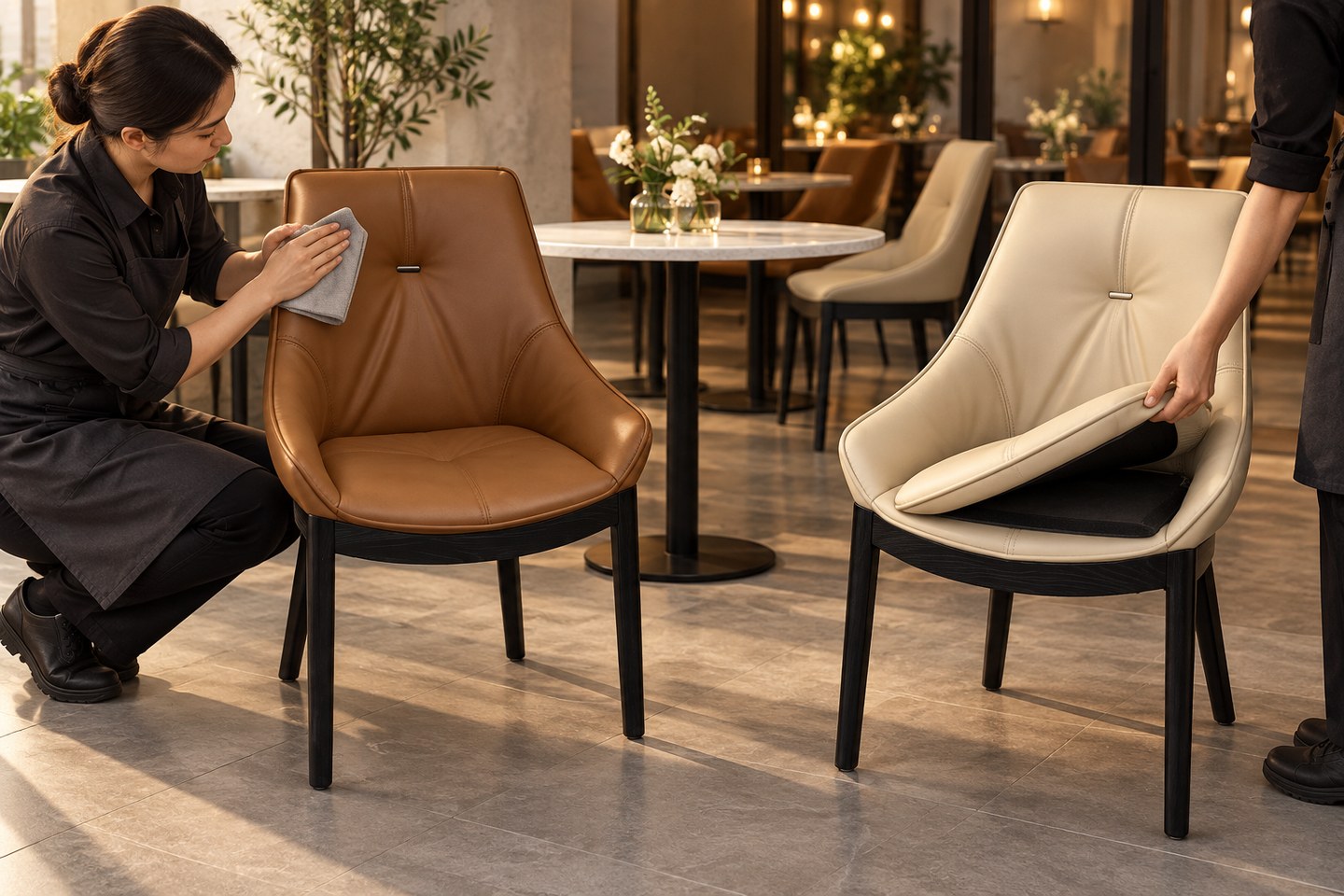
Serviceable seating separates the wear component from the durable frame. A removable seat pad, replaceable upholstered panel or accessible glide can be changed while the main chair remains useful. Confirm that removal is an approved service procedure, not simply that screws are visible. Ask for part numbers, tools, lead times and instructions.
A removable pad is not necessarily machine washable. Upholstery may be stapled to a board and require professional recovering. The value is that the pad can be removed, replaced or serviced off the floor without discarding a sound frame. Check whether the supplier can reproduce the color later and whether older and newer batches will look acceptable together.
Run a controlled sample trial
- Photograph and label each sample, then record upholstery, finish and care instructions.
- Apply the same measured amount of a representative, non-hazardous cafe spill to the approved test area.
- Follow the supplier’s response method and time every active step.
- Record residue, odor, appearance and usability after the stated drying period.
- Remove and refit any serviceable pad or panel with the approved tool and note the skill required.
- Repeat the routine-cleaning test several times to reveal cumulative finish changes.
Do not create unsafe contamination or ignore the care instructions for the sake of a tougher test. The goal is to compare realistic cafe work. If a supplier does not provide adequate cleaning guidance, record that as a procurement risk rather than inventing a method after installation.
Add downtime and spares to the cost comparison
Build a simple yearly model: purchase price, routine cleaning labor, periodic service, expected pad replacement, spare components and the operational cost of seats being unavailable. Include storage for spare pads and complete chairs. A small matching service pool can keep the dining room consistent during repairs, but only if parts are labeled and easy to reorder.
- Can the chair be cleaned before opening without remaining damp?
- Can one damaged pad be swapped while the frame stays in service?
- Are glides, fasteners and matching upholstery available separately?
- Does the replacement procedure preserve the warranty and fire-performance documentation?
- Will the chosen color reveal residue, abrasion or batch differences?
Write maintenance requirements into the order
Request upholstery identification, approved cleaners, stain-response steps, drying guidance, part diagrams and replacement lead times. Record the exact seat attachment and keep one approved tool with the maintenance kit. For a custom cafe project, send seat counts, spill profile, cleaning schedule and desired service parts through the contact page.
Review the result after the first 30 and 90 days. Compare estimated minutes with the closing team’s actual experience. Check whether certain seams or colors create repeat work and whether spare pads are being used. That feedback can improve zoning, cleaning training and the next order. The best cafe chair is not merely cleanable; it fits the time, chemicals and repair capacity of the operation.
Frequently asked questions
How should a cafe compare upholstery cleaning time?
Use the same spill, cleaner, cloth and timing method on each sample. Record active labor, repeat passes, drying time, seam cleaning and whether the chair can return to service before opening.
Is wipe-clean vinyl always the lowest-labor choice?
Not always. Surface speed is useful, but deep seams, texture, cracking risk and cleaner compatibility can add work. Compare the complete chair and the approved care process, not only the material label.
What makes an upholstered chair serviceable?
Useful features include removable seat pads or panels, accessible fasteners, replaceable glides, available matching upholstery, clear care instructions and parts that can be changed without damaging the frame.
How many spare seat pads should a cafe order?
Base the quantity on seat count, spill history, repair turnaround and storage. A small service pool can keep chairs working while pads are cleaned or recovered, but confirm color consistency and attachment details with the supplier.
Share this article: