Restaurant Furniture Second Orders: Separate Repeat Needs from First-Order Exceptions
Separate outstanding first-order remedies from genuine repeat demand before approving a restaurant’s second furniture purchase.
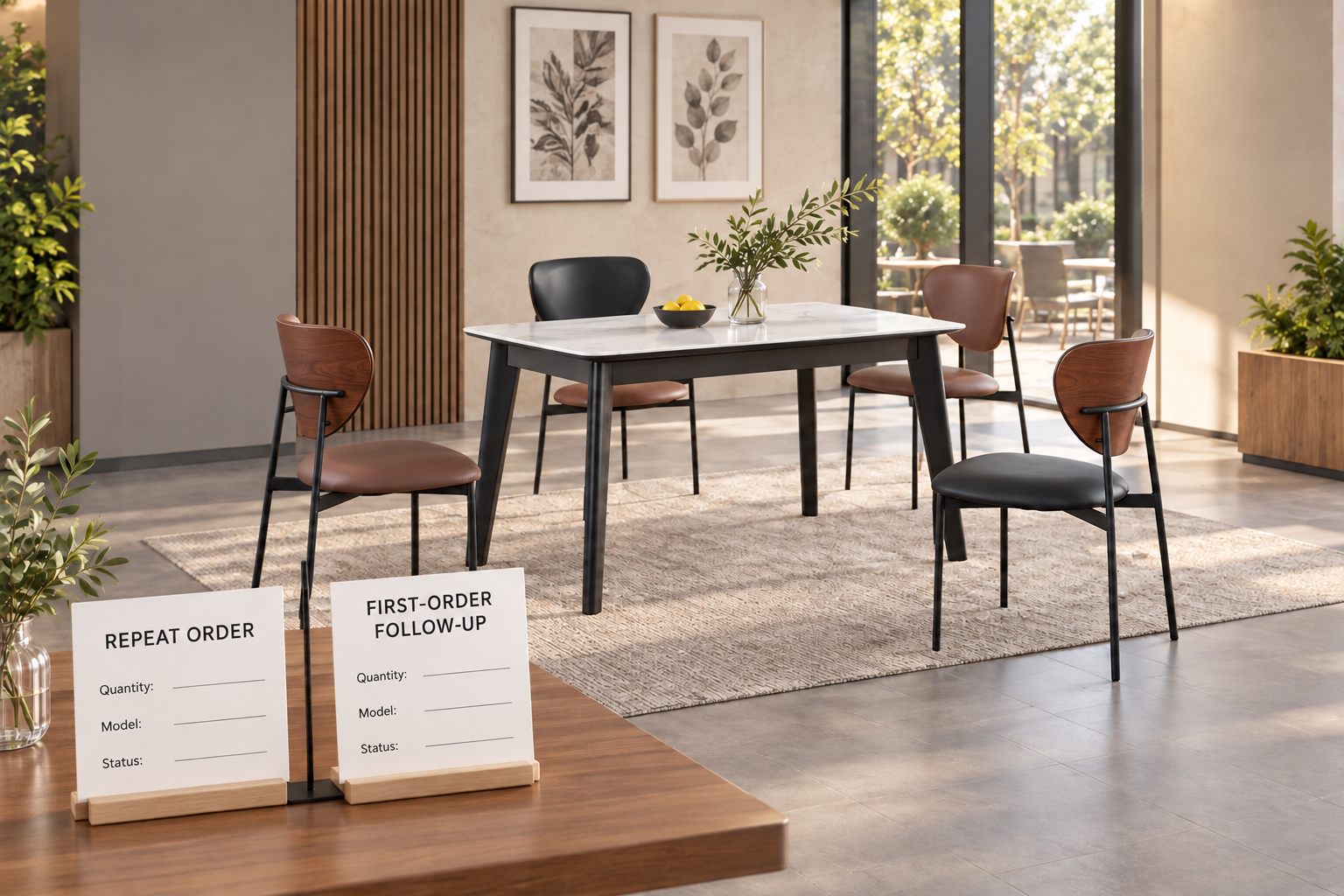
Restaurant furniture second orders should begin with a clear account of what the first purchase achieved and what remains outstanding. A request for more chairs can mean additional capacity, replenishment of used reserve stock, a response to an unresolved delivery issue, or a revised room requirement. Those demands should not be combined into one undifferentiated repeat quantity. Separate them before asking for another quotation, so the next order has a precise purpose and does not conceal unfinished work.
Reconcile the first purchase
List the accepted furniture in service, usable reserves, and items still awaiting an agreed action. Connect outstanding issues to the original order rather than counting them automatically as new demand. A replacement promised under a first-order remedy and a chair purchased for expansion are different transactions. Keep their references separate even if they eventually arrive together. This helps management understand which expenditure is genuinely additional.
Review whether the original installed quantities match the approved room allocation. If the operation moved chairs between zones or changed a table arrangement, establish the current position before treating a shortage as proof that the original order was too small. A count based on the delivery schedule alone may miss a transfer or an item held out of service. Use the current usable arrangement as the starting point for the new scope.
Identify what should be repeated
Compare operating feedback with the original brief. Ask which table groups serve their intended job and which requirements have changed. A furniture configuration may remain suitable while an event program needs a different quantity or a separate group. Record that distinction rather than describing every adjustment as product failure. Equally, unresolved concerns should not disappear because the room now looks complete.
Define the repeat demand by model, configuration, room allocation, and reason. Confirm whether the supplier still offers the approved version and identify any consequential change before the next quantity is released. Use the relevant existing approval where it remains valid, and review only the conditions that actually changed. The second order should preserve demonstrated suitability without treating the first purchase as a universal approval for every new use.
Keep the new scope separate and traceable
Ask for a quotation showing the additional purchase and any separately agreed outstanding actions. Clarify the delivery and receiving requirements for each. If the next shipment contains both remedies and newly bought stock, keep their quantities identifiable so receiving staff can close the correct records. A single total of chairs arriving is insufficient when some complete an old case and others begin a new allocation.
For a repeat enquiry involving Hengyou’s finished dining table range, provide the original accepted references and the reason for the new quantity or configuration. Use actual operating observations without claiming a proven lifespan or guaranteed commercial result. The useful second-order brief explains what will be repeated, what will change, and which first-order exceptions remain separate. That clarity lets a growing furniture program build on the first purchase without losing the buyer’s record of what was accepted and what still needs action.
Share this article: